

Reading Intervention
Why Reading Matters
Reading is fundamental to every pupil’s success. It underpins communication, learning across all subjects, and future life opportunities. At Redhill School, we understand that strong reading skills are essential for pupils to fully access the curriculum and achieve their potential.
Our Approach to Reading
We follow the Department for Education’s (DfE) guidance on teaching reading, ensuring that every pupil develops from early phonics through to fluent, confident reading by the time they reach secondary school. Our approach is research-based and aligns with national expectations and Ofsted’s Education Inspection Framework.
Supporting All Pupils to Read Confidently
We know that some pupils, especially those disadvantaged or with special educational needs, may face challenges in learning to read. We have a clear, targeted strategy to provide effective reading interventions, ensuring no pupil is left behind.
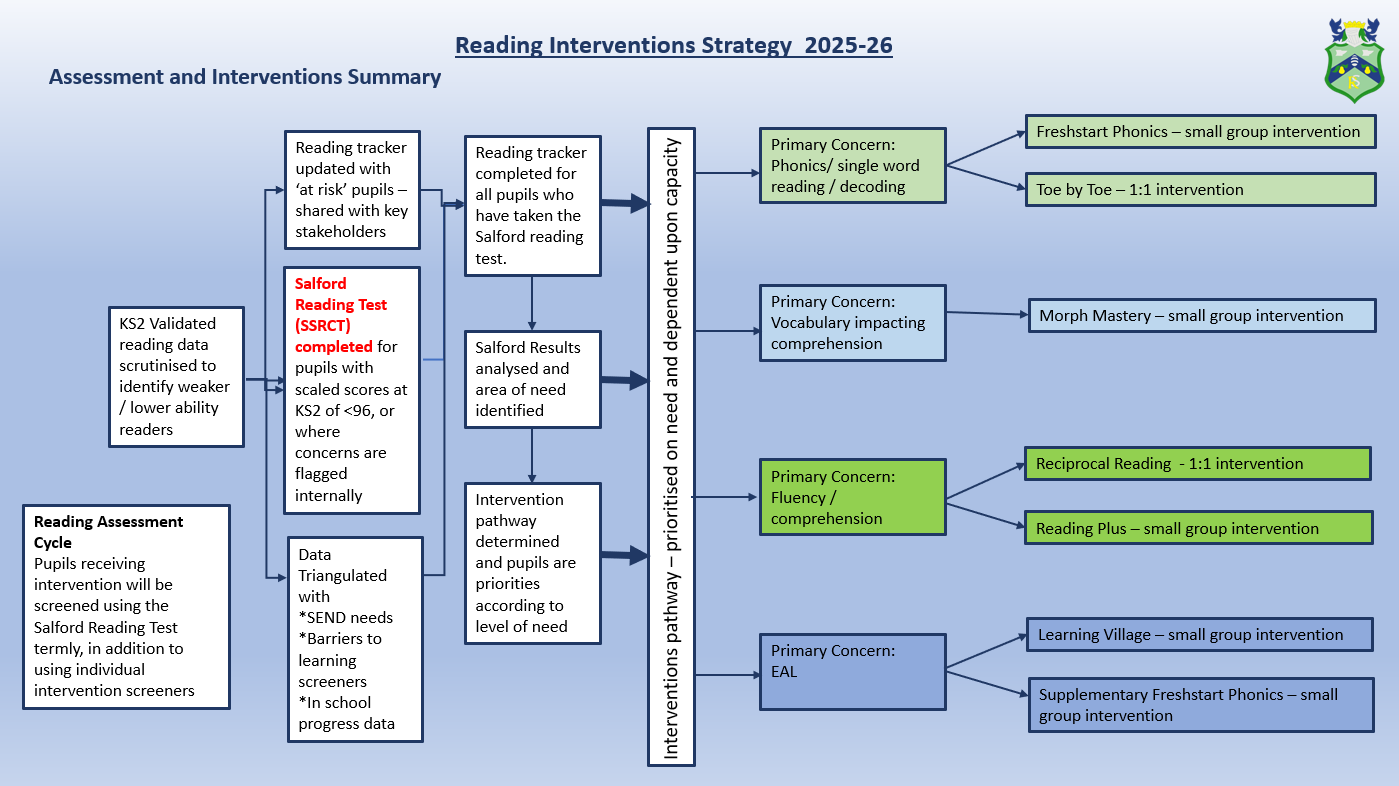
How We Identify and Support Pupils Who Need Extra Help
· Initial Identification: We use KS2 reading data and termly assessments (Salford Standardised Comprehension and Reading Test) to identify pupils needing support.
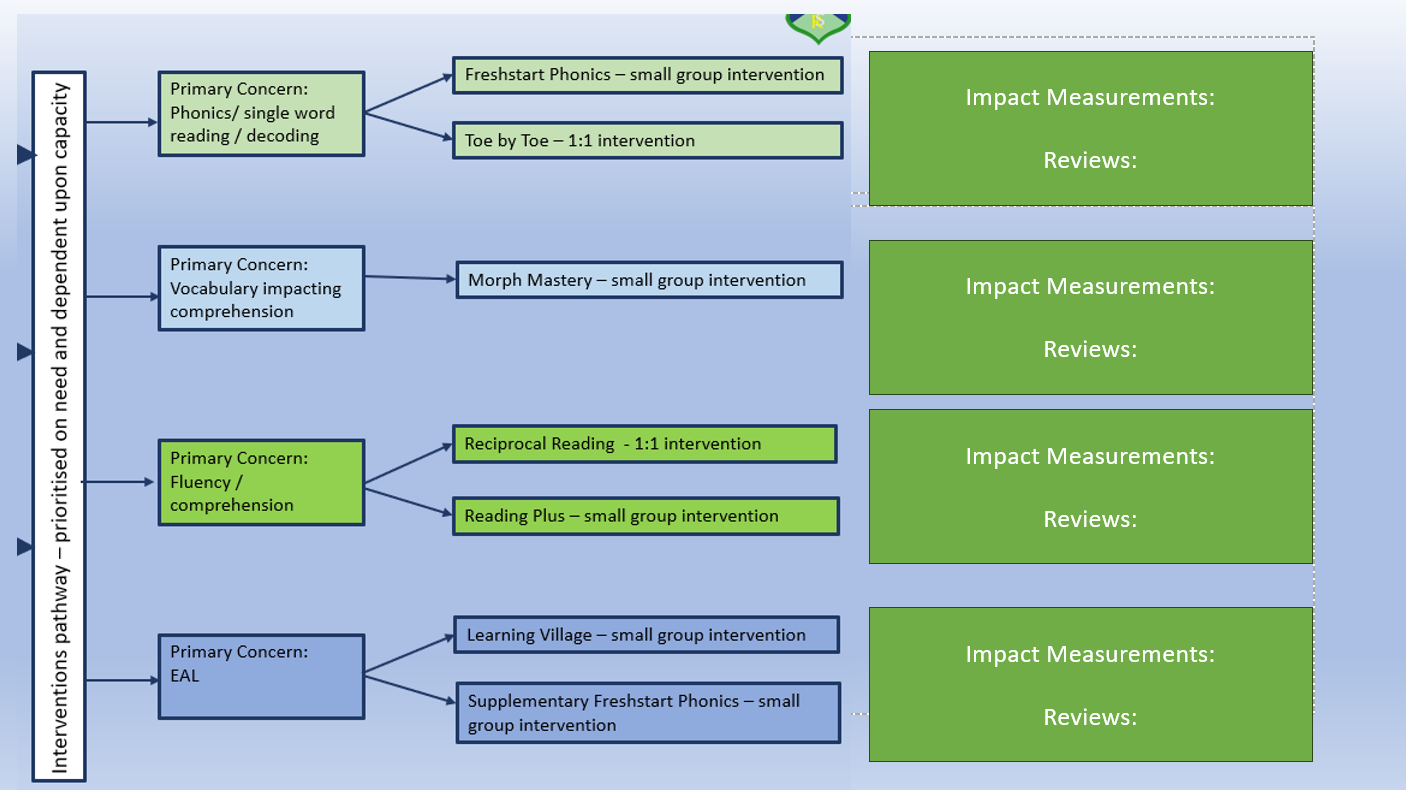
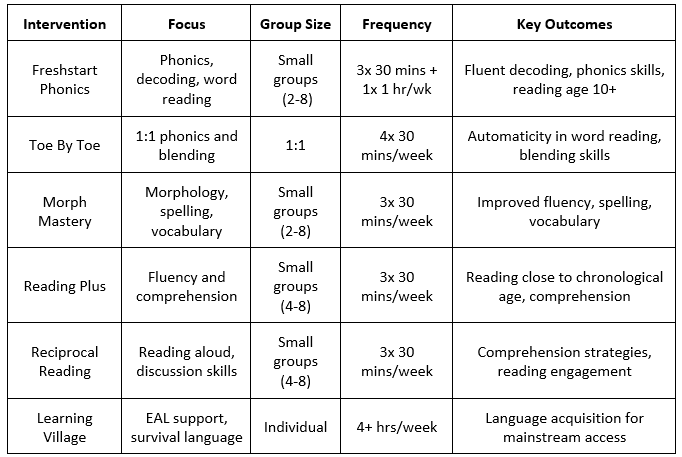
· Tailored Interventions: Pupils receive personalised support through evidence-based programmes such as Freshstart Phonics, Toe By Toe, Morph Mastery, Reading Plus, Reciprocal Reading, and Learning Village (for EAL learners).
· Regular Monitoring: Progress is closely tracked to ensure interventions are effective and pupils make rapid gains. Exit criteria are clear for each programme to help pupils move back into mainstream learning confidently.
Our Reading Interventions at a Glance
Our Commitment to Continuous Improvement
We invest in training for staff delivering reading interventions to maintain high-quality teaching.
We prioritise timetabling so pupils consistently attend interventions without missing key lessons.
We communicate regularly with all staff about pupils receiving support to embed skills across the curriculum.
We use data-driven approaches to monitor impact and adapt interventions accordingly.